
It’s officially the most wonderful time of the year.
Not just because of the twinkling lights, cozy sweaters, peppermint mochas—I’m personally fond of the eggnog latte—or Target’s playlist of “All I Want For Christmas Is You” on a never-ending loop.
We’ve entered Advent. And for many of us, Advent looks like a countdown to Christmas—chocolate calendars, holiday movies, and the glow of a thousand perfectly curated cozy Instagram stories.
All of that is great, but none of it is actually how Scripture introduces Advent.
Because in Scripture, Advent doesn’t begin with coziness.
As Fleming Rutledge puts it, “Advent begins in the dark.”
It begins with confusion. It begins with fear.
Advent begins with disruption.
And if I’m honest, that lands for most of us—because life rarely unfolds according to our carefully laid plans. The Christmas story isn’t just candles and carols. It starts with two ordinary people, blindsided by God’s interruption. A young girl who wasn’t looking for a miracle. A young man who just had his future fall apart.
Advent is about arrival. But it’s also about waiting. We are a people living between two arrivals—between Bethlehem and Christ’s return. We live in the tension of longing, hoping, and walking by faith when we don’t have the details.
And here’s the idea I think Advent asks us to hold onto:
Joy begins where our plans end and God’s interruptions begin.
Not when everything becomes crystal clear. Not when life lines up. Not when the anxiety disappears. But when God steps into the middle of our uncertainty and calls us to trust Him.
Comfort Comes Through Calling
Luke 1 opens with the angel Gabriel appearing to Mary, and the first thing we’re told is that she was greatly troubled.
And who can blame her?
She’s a nobody from a nothing-town called Nazareth. She’s engaged. She has a life plan. She’s thinking marriage, family, a quiet ordinary existence.
But God is an expert at disrupting expected outcomes.
Mary receives a calling before she receives comfort:
“Greetings, O favored one, the Lord is with you.” (Luke 1:28)
She doesn’t earn it. She doesn’t audition. She doesn’t pray the right prayer or demonstrate heroic faith. God calls her because God chose her.
And when she asks the obvious question—“How can this be?”—God doesn’t shame her for it. That might be one of the most freeing truths in the whole story:
God is not threatened by our questions.
Which is really good news for people like us who live most of our lives wrestling with uncertainty.
I’ve spent years learning this lesson myself. My plans rarely unfold according to the script I wrote in my head. I’ve lost jobs. Dreams died. There have been long seasons of waiting. The calling God began in me over 20 years ago hasn’t even fully materialized. So many times I’ve only seen a glimpse and then…waited.
But here’s what I’ve learned:
Comfort isn’t the absence of uncertainty. Comfort is the presence of God in it.
Some of us want the comfort first. Biblically, it’s the other way around.
Comfort comes through calling.
God comforts because He’s calling you into something bigger than you can manage alone.
So let me ask: Where is God interrupting your plans? Where is He challenging the script you wrote for your life? Where is there confusion that might be the beginning of calling?
Trust God, Not the Details
The story continues with Joseph in Matthew 1—and if anyone had a right to feel blindsided, it was him. His life is completely upended. His plans implode. His reputation suffers.
And God gives Joseph the same gift He gave Mary—not an explanation, but Himself.
No instructions. No logistics. No five-year plan.
Just identity and assurance.
“You shall call his name Jesus, for he will save his people from their sins.” (Matt. 1:21)
If you’re anything like me, you want more than that. You want the blueprint. You want the “how” and the “when” and the “why.”
I’ve been known to peek at Christmas presents, shake boxes, and try to outsmart the gift-giver. (My wife can confirm this.)
Last year she got me a piece of actual film from The Lord of the Rings: Fellowship of the Ring. Easily one of the best gifts I’ve ever received. But the real joy wasn’t even in the gift—it was in the trust that the giver knows and loves me.
And it hit me: If I can trust my wife enough to be surprised by her gift, why is it so hard to trust God without demanding the details?
Advent teaches us that kind of trust.
Advent trains us to trust God, not the details.
You don’t need the whole story to take the next step of faith. You just need to believe that God is good.
So here’s the question: Where is God inviting you to trust Him without the full explanation?
Obedience Makes Space for Joy
This is the hinge of the whole story—not just for Mary and Joseph, but for us.
Mary hears the most life-altering news imaginable. She has every reason to panic and push back. But instead, she gives God her yes:
“Behold, I am the servant of the Lord; let it be to me according to your word.” (Luke 1:38)
Joseph responds with the same posture:
“He did as the angel of the Lord commanded him.” (Matt. 1:24)
No bargaining. No conditions. No request for timeline and budget. Just obedience.
Not because they had all the answers. And certainly not because the path was easy. They obeyed because they trusted the One who disrupted their plans.
And that’s where joy enters the story.
Obedience makes space for joy.
We think joy comes when the puzzle pieces fit. When the future makes sense. When our prayers are answered.
Biblically, joy doesn’t follow clarity.
Joy follows surrender.
Joy is formed in us when we say yes to God—even when it costs us something.
Mary’s obedience literally formed Christ in her. Joseph’s obedience formed Christ in his home. And our obedience forms Christ in our lives.
Which means the question of Advent isn’t: “Do you understand what God is doing?”
It’s: “Where is God asking you to obey?”
Where is He asking for your yes—your surrender and your trust?
What if the comfort and joy your heart has been aching for is on the other side of obedience—not because you get control or certainty—but because you get Jesus?
Emmanuel. God with us.
God in the interruption.
God in the waiting.
God in the dark.
This Advent season, may we learn to say with Mary:
“Let it be to me according to your word.” (Luke 1:38)
And may that yes open the door to joy.
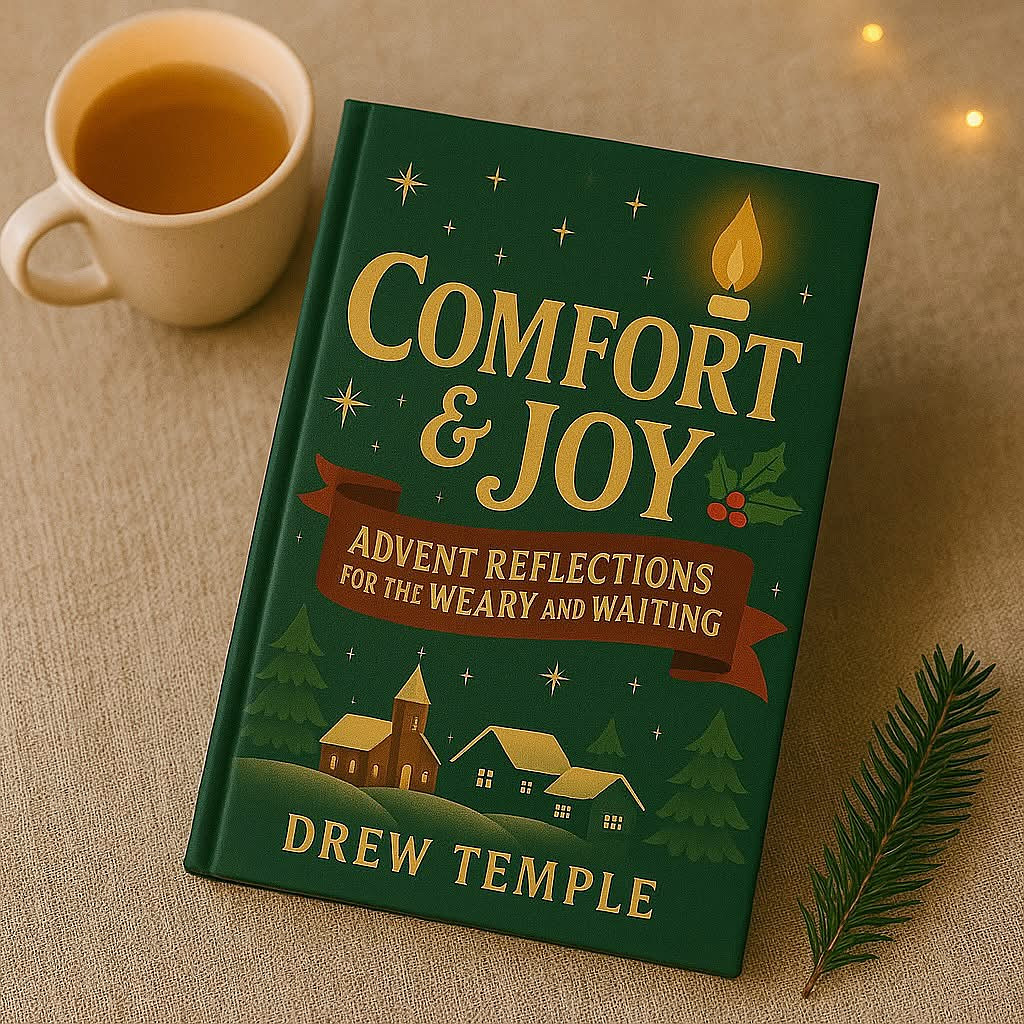
To read more on Advent, head over to Amazon to get your copy of my book, “Comfort & Joy: Advent Reflections for the Weary and Waiting”

 Pillar & Page
Leave a comment